

On Monday, I walked out of the Middendorf-Kredell Library at 1:45 pm, leaving my laptop on a desk in the quiet room. The sky was clear, gorgeous. The sun was starting to dim, however. I’d spent two hours that morning trying to find a pair of eclipse glasses. It was futile. Apparently they had been sold out for days.
We wouldn’t have “totality” here in St. Charles County, but 99% of totality is not bad, I thought, and that would occur at 1:59. I thought I might be able to gaze up then. However, when a librarian noticed that I did not have eclipse glasses, she said, “You don’t have glasses! Wait here. We have a few pairs set aside at the information desk.”
She returned in thirty seconds and handed me the cardboard eyewear that would keep me from going blind. Now I was ready. In just a few minutes, the moon would cross the face of the sun, a rare phenomenon that has amazed humans since ancient times: a total solar eclipse. Over the course of several hours, tens of millions of people would fall beneath the moon’s shadow as it swept across the American continent at almost 1,500 miles per hour.
At 1:55 pm, I noticed that traffic on Highway K had diminished significantly. Highway K carries almost 40,000 cars a day. At 2 pm, cars and trucks should have been passing the library at one or two per second. There was nothing. It was quiet. Clearly, people were stopping what they were doing and looking up at the sky.
Meanwhile, at Joy’s school, teachers were showing a live broadcast of the event in all classrooms. School officials had no plans to let four- and five-year-olds go outside and look up at the actual sun (with or without proper eyewear). I was certain that Joy was bored out of her mind.
At 2 pm, two dozen librarians and library patrons stood on the sidewalk and gazed up at the sun. Next door, at Imo’s, employees were standing in the parking lot doing the same thing.
It’s difficult to describe what it’s like to watch the moon block the sun. As I looked up, a model of the sun, earth, and moon played in my imagination. And I felt something like wonder.
Later, I thought about how rarely I look up at the moon and the stars. Living in an urban area, it is certainly difficult to see stars at night. But the moon is visible almost every day. It really is an amazing planet we live on.
Have you ever seen the DreamWorks animation that plays before animated Universal movies? The version I’m thinking about shows the figure of a boy lazily fishing while sitting on the edge of a crescent moon. It reminds me that it’s easy for children to believe in magical things, such as that the white, glowing crescent in the sky is a great place to sit and fish. Only later do we understand: “Hey, the rest of the moon is still there. And it’s massive. The black part is just shadow.” In school we learn much about the moon. How far away it is. Its history. How difficult it is to get there and get back. And although we never fully grasp the scale of the solar system and the universe, we know that the universe is wondrous, mysterious, and amazing, and more so the more we learn about it.
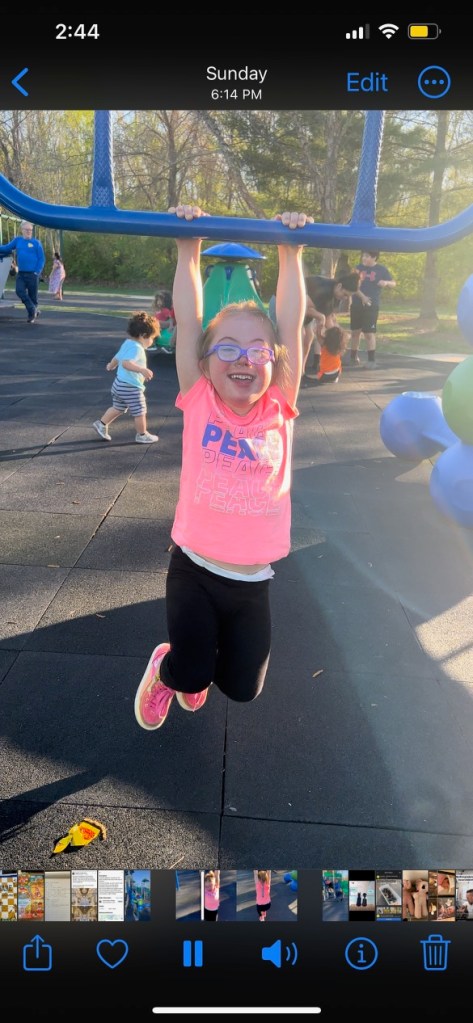
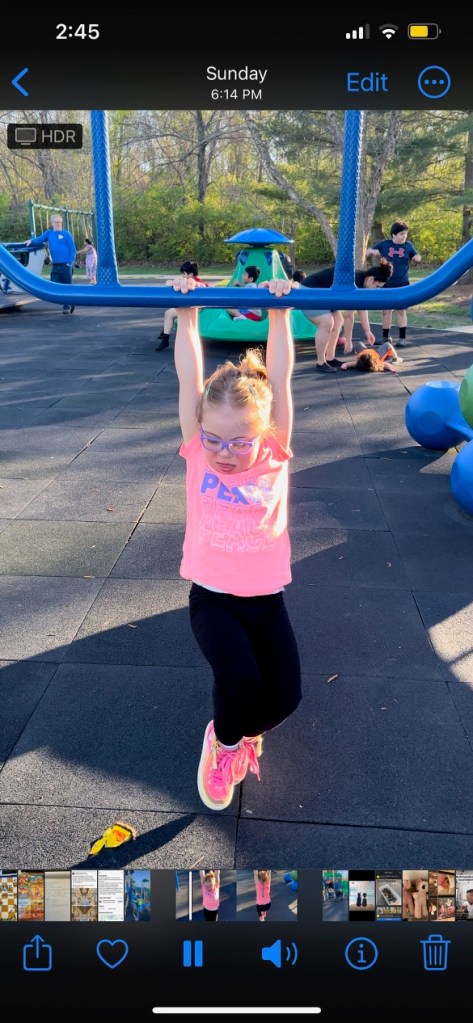
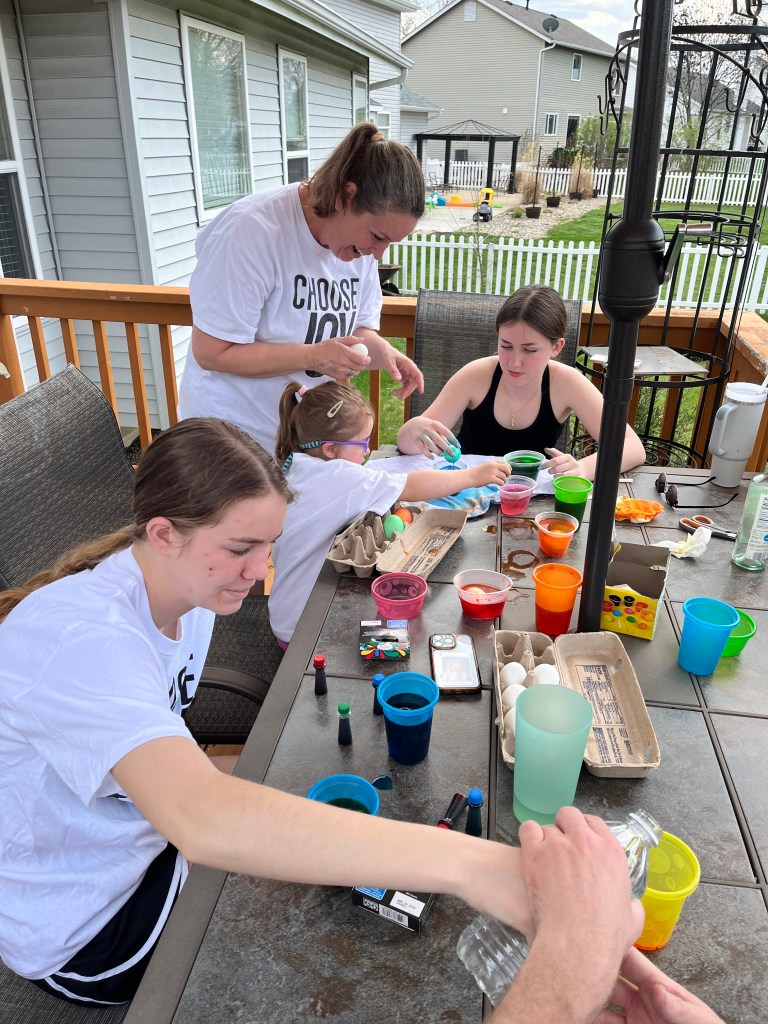
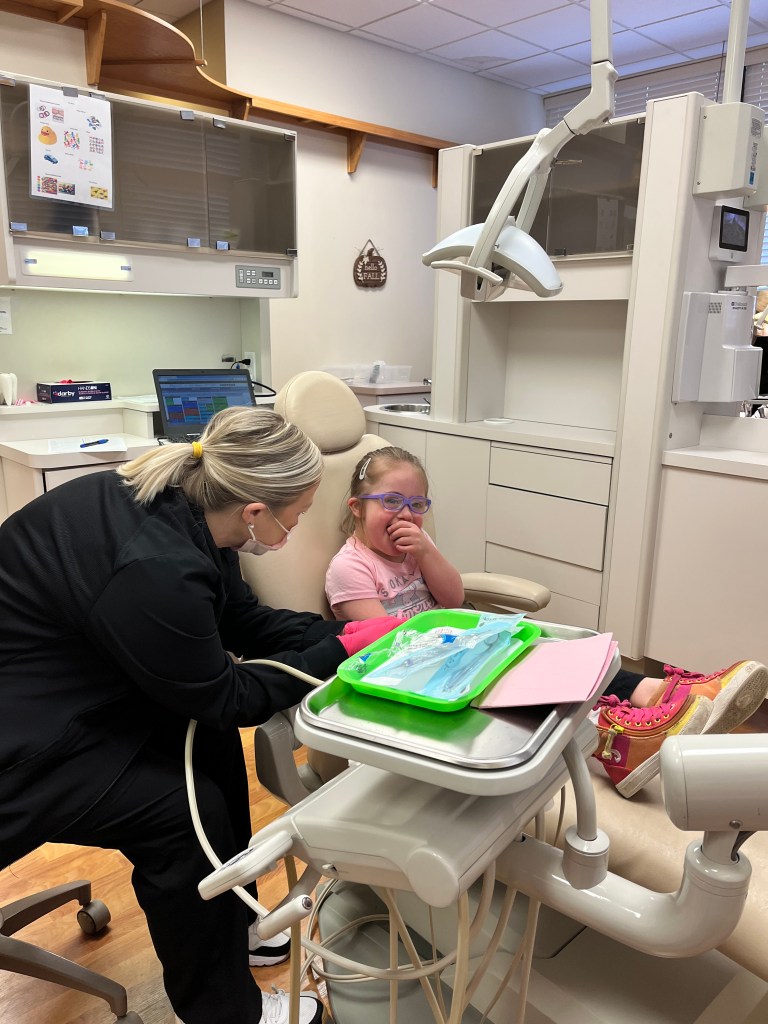
Joy is our sunshine. She is the sun in our family solar system. And if I’m the moon, then I guess I orbit the thing that orbits Joy. Yes, my presence waxes and wanes. I’m at home, then I’m away. I’m in my office working, then in the yard running after Joy. I give Joy a bath in the morning, then head to the store and the library. I tuck her into bed, watch her fall asleep, then get up and get back to work. She may see just a sliver of me today. But I’m still all here, just in shadow. In the evening, Joy, if you look up, you will see me. My love never wanes.
And once in a while the orbiting bodies in our system perfectly align, and for a moment a shadow is cast, and people look up and are amazed at the perfect shape of our world.


 Joy Elizabeth